






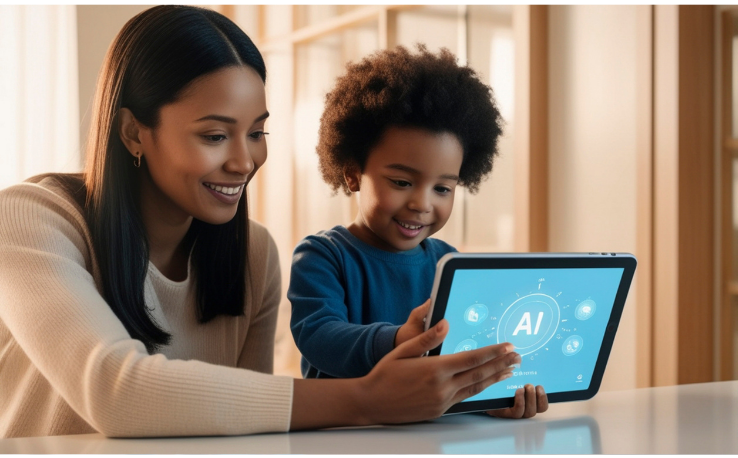
Artificial Intelligence (AI) is becoming increasingly common in education and is significantly changing the way children learn both in schools and at home. Technology that was once considered advanced is now commonly used in daily learning through apps, online platforms, and classroom tools. From personalised learning systems and virtual tutors to interactive educational apps, AI is reshaping how knowledge is delivered and how students engage with learning content.
As education continues to evolve in a digital direction, AI is playing a growing role in supporting both students and teachers. It is influencing not only how lessons are taught but also how students revise and apply what they have learnt and acquire a deeper appreciation of different subjects through in-depth analysis, synthesis and critical evaluation. While AI offers many opportunities for improvement in education, it also raises important concerns about the negative impact it may have on students’ thinking skills, learning habits and social development.
Positive Impact of AI on Student Learning
Personalised Learning Experience
One of the most significant advantages of AI in education is its ability to provide personalised learning experiences. Traditionally, classroom teaching often follows a fixed pace, which may not suit every student. Some learners may find lessons too fast, while others may feel unchallenged. AI helps solve this issue by adjusting learning content according to each student’s ability level, progress and performance.
With the help of AI-powered platforms, students can receive customised exercises, targeted feedback and tailored explanations based on their strengths and weaknesses. This allows them to focus more on areas they struggle with while still progressing in subjects they are confident in. As a result, learning becomes more balanced, efficient and adapted to individual needs.

Flexible and Self-Directed Learning
AI also makes learning more flexible by allowing students to study anytime and anywhere. Unlike traditional classroom learning, where students must follow a fixed schedule, AI-based platforms give learners the freedom to access materials whenever they need them.
Students can revisit lessons, replay instructional videos, and repeat exercises as many times as necessary until they fully master the topic. This self-paced approach is especially helpful for students who need more time to grasp difficult concepts. It also encourages responsibility and independence in managing their own learning progress, which is an important skill for lifelong education.
Increased Engagement Through Interactive Learning
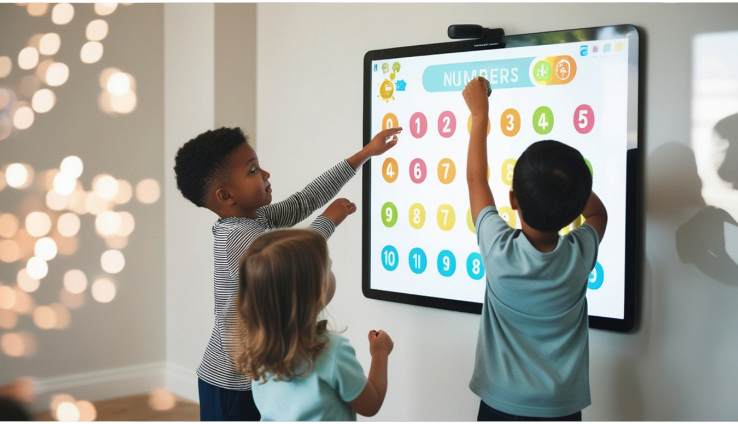
Another major benefit of AI is that it gets students to engage more with the learning process and in so doing to find it more rewarding. Instead of relying solely on textbooks and written exercises, students can now learn through interactive tools such as educational games, simulations, quizzes, animations and virtual assistants.
These features help break down complex concepts and abstract topics and render them more comprehensible. For example, science experiments can be simulated digitally, and mathematical problems can be visualised step by step. This type of interactive learning helps students stay more interested and motivated.
In addition, AI-based learning platforms often include gamified elements such as points, levels, rewards, and progress tracking. These features encourage students to participate actively and maintain consistency in their learning journey.
Improved Accessibility and Inclusive Education
AI also plays an important role in making education more accessible to students with different learning needs and abilities. Through tools such as speech-to-text, text-to-speech, translation systems, and adaptive learning technologies, students are able to learn in ways that best suit them.
For example, students who have difficulty reading can benefit from audio supported learning materials, while those learning a second language have the option of using real-time translation and pronunciation assistance. Students with learning disabilities could be offered customised support that adapts to their pace and comprehension level.
This helps create a more inclusive learning environment where all students have opportunities for learning and succeeding on the basis of their ability and need.
Negative Impact of AI on Student Learning
Reduced Scope for Independent Thinking and Problem-Solving Skills
Despite its advantages, AI also presents challenges to student development. One of the main concerns is that students may become too reliant on AI tools for answers and solutions. Since AI can provide instant information, students may be tempted to use it as a shortcut instead of working through problems themselves. They also often fail to realize that the information AI provides is not entirely truthful or accurate and needs to be evaluated and verified using the higher order cognitive skills.
Thus, it is fair to say that AI reduces opportunities for critical thinking and independent problem-solving. When students depend too heavily on AI-generated answers, they may not fully engage with the learning process or develop a sound mastery of the subject matter. The net result would be a weakening of their analytical skills and their ability to think creatively or logically when facing new problems.

Overdependence on Technology and Increased Screen Time
Another issue linked to AI in education is the growing student dependence on digital devices. The widespread use of AI-powered learning tools often results in students spending too much time focused on their screens.
Excessive screen time can have several negative effects, including reduced physical activity, shorter attention spans, and a decreased ability to focus for long periods. It may also affect the overall well-being of students if not properly managed.
In addition, not all students have equal access to good quality digital devices or stable internet connections. This digital divide can give rise to inequality in education, where some students benefit more from AI-based learning while others are left behind.
Reduced Social Interaction and Communication Skills

AI-based learning may also impact students’ social development. As more learning activities shift to digital platforms, students may have fewer opportunities for face-to-face interaction with teachers and classmates.
This reduction in direct communication may affect the development of important soft skills such as teamwork, collaboration, empathy and oral communication. Classroom discussions, group activities and real-life interactions are important as they enable students to build confidence and social skills.
If students rely too heavily on technology for learning, they may become less skilful and comfortable while engaging in real-world conversations in collaborative environments such as the workplace and in daily life. And that is likely to have negative impact at work and on their life as a whole
Artificial Intelligence is transforming education in many positive ways by making learning more personalised, flexible, interactive and accessible. It allows students to learn at their own pace, engage with content in creative ways and receive support tailored to their individual needs. These improvements have made education more effective, efficient and inclusive than ever before.
However, AI also presents challenges that should not be overlooked. Overreliance on technology and increased screen time may stifle independent thinking, and limit social interaction and thus negatively affect the quality of work and life. These issues highlight the importance of understanding the potential of AI and managing its use responsibly in educational contexts to optimise its value for students in the learning process.
Ultimately, AI should be seen as a supportive tool rather than a replacement of traditional teaching methods or human interaction. It is important to strike the right balance between technology and the true purpose of learning. AI can then play its part in enhancing the quality of education while at the same time encouraging students to develop critical thinking skills, creativity and meaningful social connections.