









There are days when children seem to have more emotions than words.
A toy breaks and suddenly it feels like the end of the world. A friend chooses someone else to sit with at lunch, and your child comes home quieter than usual. Sometimes there is a full-blown meltdown over something that, from an adult’s point of view, seems relatively minor.
As parents, it can be hard to know what to do in those moments. We want to make things better. We want the tears to stop. We want to reassure our children that everything is okay.
But often, children do not need us to fix the problem straight away. They need to feel that someone understands what they are going through.
Talking about emotions is not always easy, especially if we did not grow up in families where feelings were openly discussed. The good news is that it does not have to be complicated. Some of the most helpful conversations happen in ordinary moments, with simple words and lots of of patience.
Sometimes, Just Listen
When a child is upset, adults tend to ask a lot of questions.
“What happened?”
“Why are you crying?”
“Did you do something?”
We ask because we want to understand. But when children are overwhelmed, they may not even know how to explain what they are feeling yet.
Sometimes it helps to simply sit beside them and say, “I’m here.”
You do not need to fill every silence. Let your child know that you are listening and that there is no rush to explain everything.
I think this is one of the hardest things for parents to learn. We are so used to solving problems that listening without immediately offering a solution may feel like we are not doing enough. In reality, being present is often exactly what a child needs.
Help Them Find the Words
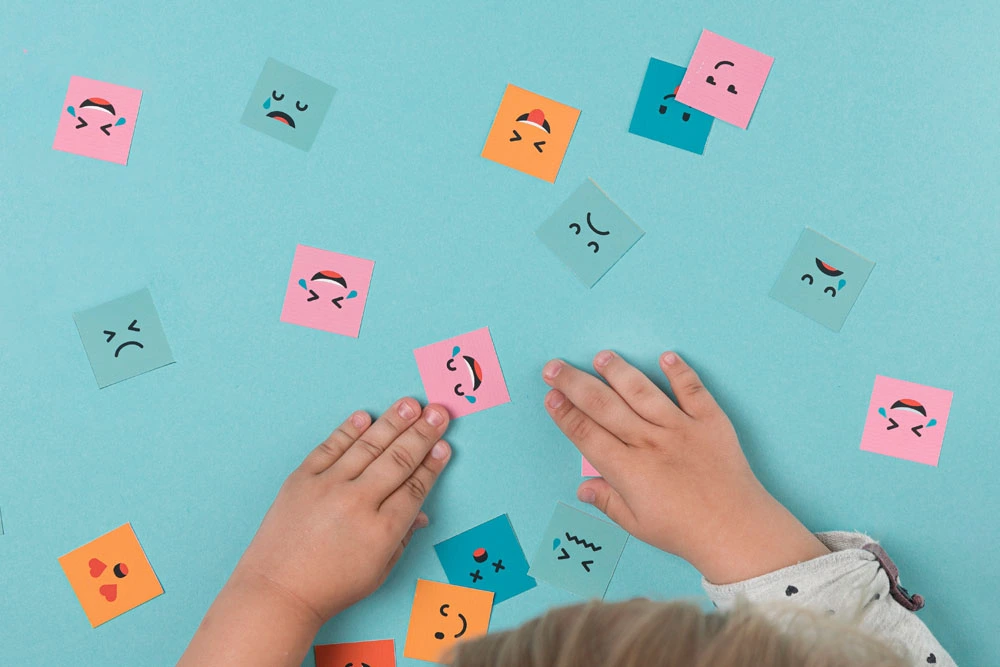
Young children often feel emotions before they can name them.
A child might say, “I hate school,” when he or she is actually nervous about speaking in front of the class. Another might slam a door because he or she is disappointed, not angry.
You can gently offer words.
“You seem really frustrated.”
“I wonder if you are feeling left out.”
“That sounds like it made you feel embarrassed.”
You will not always guess correctly, and that is okay.
“No, I’m not angry. I’m sad.”
That is actually a good thing. Your child has just practised identifying what he or she is feeling.
Over time, children build a bigger emotional vocabulary. Instead of saying “bad” or “fine,” they begin to recognise the difference between feeling disappointed, worried, jealous or just overwhelmed.
Let Them Know That Feelings Are Not Wrong
Many of us grew up hearing phrases like “Don’t cry” or “You shouldn’t be upset.”
We usually say these things because we want our children to feel better. But children may hear them as a message that certain emotions are not acceptable.
It is perfectly normal to feel angry. It is normal to feel jealous when someone else gets something you wanted. It is normal to be nervous before trying something new.
The feeling itself is not the problem.
The important lesson is that while all feelings are allowed, not all behaviour is.
You might say, “It is okay to be angry with your brother. But it is not okay to hit him.”
That simple distinction teaches children something valuable. They do not need to feel ashamed of their emotions, but they are still responsible for how they act.
Resist the Urge to Make It Better Straight Away
This one can be surprisingly difficult.
Imagine your child comes home upset because he or she was not invited to a classmate’s birthday party. Your instinct might be to organise something fun that weekend or tell your child not to worry because there will be other parties.
Those things may help eventually. But before moving on, it is worth acknowledging the disappointment.
“That must have hurt.”
“I can see why you feel sad.”
Children need to know that they can survive uncomfortable feelings. If we rush to remove every disappointment, they do not get the chance to discover that sadness eventually passes.
That does not mean leaving them to deal with it alone. It simply means staying with them while they work through it.

Talk About Feelings When Everyone Is Calm
The best time to teach children about emotions is often not during an emotional moment.
Stories are a great starting point.
When you are reading together, pause and ask, “Why do you think she is upset?” or “What do you think he could do next?”
You can talk about characters in films or even people you see during the day.
Children often find it easier to discuss someone else’s feelings before talking about their own.
It also helps if they hear adults talking honestly about emotions.
“I was a little nervous before my meeting today.”
“I’m disappointed that our plans changed.”
When parents talk about feelings in a calm, matter-of-fact way, children learn that emotions are simply part of everyday life.
Remember That Feelings Change
One of the things children have not yet learned is that emotions come and go.
When a five-year-old is furious, he may genuinely feel as though the anger will last forever.
You can gently remind your child, “You are really upset right now. We can wait until you feel calmer.”
This does not make the feeling disappear, but it helps children understand that emotions are temporary.
With time, they begin to recognise patterns. They remember that they have felt disappointed before and that eventually they felt better.
That understanding builds resilience.
Find What Helps Your Child Calm Down
There is no single strategy that works for every child.
Some children need a hug. Others need space. Some want to talk immediately, while others need to run around the garden before they are ready to say anything.
You might notice that your child settles after drawing, listening to music, reading or taking a walk together.
The important thing is to discover what works for your child and practise it when things are calm. It is much easier to remember a calming strategy if it has become familiar.
You Do Not Have to Get It Right Every Time
Parents have big feelings too.
There will be days when you are tired and your child’s tears are the last thing you feel able to deal with. You may lose your patience or say something you wish you had phrased differently.
That does not mean you have failed.
One of the most powerful things we can teach children is how to repair a relationship.
“I’m sorry I shouted earlier. I was frustrated, but I should have spoken more calmly.”
When children hear an adult apologise, they learn that mistakes do not have to damage relationships. They learn that emotions can be managed and that people can make things right.

When It Might Be Time to Ask for Help
Most children have emotional ups and downs. A difficult week does not necessarily mean something is wrong.
However, if your child seems persistently anxious, unusually withdrawn or is struggling to cope with everyday activities for several weeks, it may be worth talking to a teacher, a school counsellor or a healthcare professional.
Sometimes children need a little extra support, just as they might need extra help with reading or maths. Asking for help is simply another way of caring for your child.
The Conversations Add Up
Talking about big feelings is not about having one perfect conversation.
It happens in small moments.
It is sitting beside your child after a difficult day. It is listening to a long story about a disagreement with a friend. It is helping your child find the word “disappointed” instead of simply saying, “I’m mad.”
These conversations may not seem significant at the time, but they add up.
Over the years, they teach children that their feelings are worth talking about and that they do not have to face difficult emotions alone.
Children will always have big feelings. That is part of growing up.
What parents can offer is not a life without disappointment, worry or frustration, but the reassurance that whatever they are feeling, there is someone who will listen, who will help them make sense of what they have experienced and remind them that they will get through it.